100 stories from the hiking route
1999 – Kavastu Ferry starts operating again
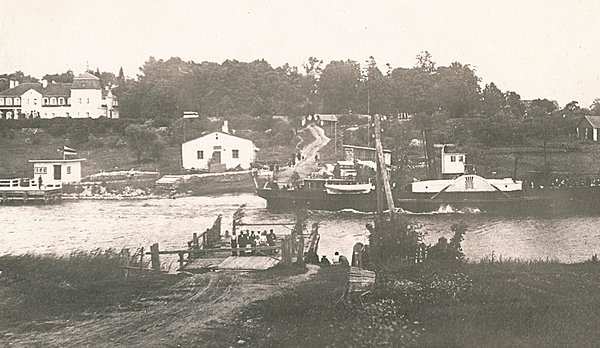
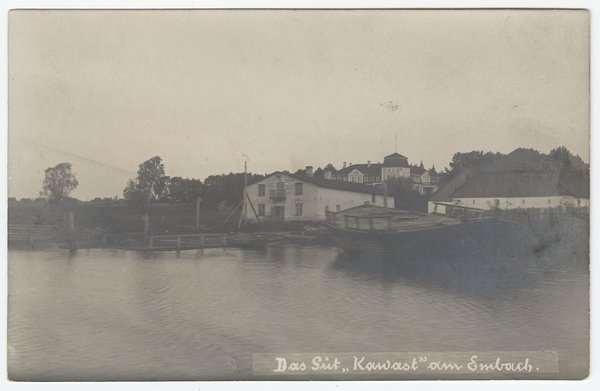
Rivers that intersected with roads were a major obstacle up until the 20th century. Only a few Livonian rivers had permanent bridges, as they were expensive and time-consuming to build. Rivers were usually crossed at fords.During the last decade of the 19th century, the innovative baron Werner Wulff was the head of the Kanastu Manor. Upon his initiation, a ferry crossing the River Emajõgi was put into operation in 1899, pleasing the local meat and dairy producers. However, the lives of the people and horses on the ferry were often at risk, as crossing the river with the ferry was still rather dangerous at the time.
In Livonia, ferries were usually owned and maintained by the local manor. The obligation later shifted to rural municipalities and then, to county governments starting from 1930. The ferry was mostly rented out which also meant paid passage. It was not rare for the driving chain of the ferry to break and the ferry to drift downstream because owners often tried to cut costs. The ferry connection was often interrupted by the ice breaking during the spring and by high waters.
Kavastu also had a wooden bridge for a short time during the war. In 1983, the driving chain of the ferry broke and it disappeared downstream. The century-old tradition of crossing the river with a ferry was revived in 1999 in the collaboration of the Luunja rural municipality and AS Giga. The original flywheel was raised from the bottom of the river and put to use again. The Kavastu ferry river crossing is the only one in Estonia today.
×
![1999 – Kavastu Ferry starts operating again]()
Topic
Coordinates
Long-Lat WGS 84
Latitude: 58.3812601
Longitude: 27.0398211L-EST 97
x:
y:
Location
Ähijärve-Aegviidu matkatee