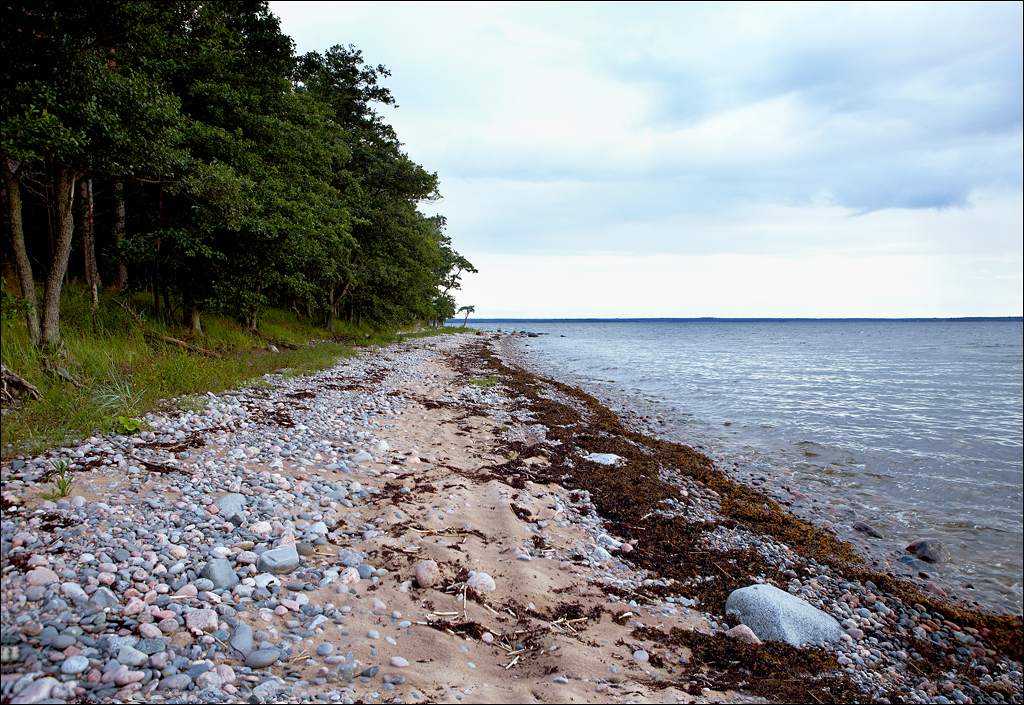
Freedom to roam
Everyone has the right to participate in Estonian nature as a national common property. As the load-bearing capacity of the fragile Nordic nature is not great, it obliges both the person moving in nature and the landowner to protect biodiversity and keep the environment clean and unspoiled.
The rights and duties that bind man to nature are called the freedom to roam. These are ethical beliefs that are based on both laws and practices that were already respected by our ancestors.
In nature, you can:
- walk, cycle, ski, boat, and ride on horseback, where doing so is not prohibited by or under the law
- stay anywhere movement is permitted, including camping for one day, unless prohibited by the landowner
- harvest wild berries, mushrooms, flowers, medicinal plants, hazelnuts and other natural resources that are not under nature protection. On private land, the owner may prohibit the harvesting of natural products
- fishing with one simple hand line on public waters or on waters designated for public use
In nature, it is forbidden to:
- move about in the yards of local residents, plantations, apiaries, sowings, crops and other agricultural land, whereby damage is caused to the owner
- camp for more than one day and start a fire without the permission of the owner or possessor of the land
- hunt and fish without authorisation, except with simple handlines
- injure trees and shrubs
- disturb the domestic tranquility of local inhabitants
- damage the habitats and nests of wild animals and birds, collect their eggs, take them home or otherwise cause harm to them;
- damage protected natural objects and protected species
- use motor vehicles where prohibited
- pollute nature
More about moving and camping
In Estonia, walking, cycling, skiing, boating, or horseback riding is allowed on the natural and cultural landscape.
Moving about on private land that is neither fenced nor marked is permitted at any time, along with the gathering of berries, mushrooms, medicinal plants, and fallen or dried branches, unless prohibited by the owner. Similarly, camping on private land that is neither fenced nor marked is permitted for a period of up to twenty-four hours, unless prohibited by the owner. When camping, one must remain outside of the viability and hearing distance of the dwelling. Also, the causing of damage to property and environmental nuisances must be avoided both when staying on a plot of land belonging to another person and in tents.
If private land is fenced or marked, permission from the owner is required to pass through and stay on it. Fencing and markings must be understood in such a way that signs or fences indicating private land are visible to everyone. A single boundary stone or an old dilapidated garden cannot be considered a boundary or a marker. The distance between the signs shall be such that they cannot be passed unnoticed.
The landowner may allow movement on their land but, for example, prohibit camping or the gathering of natural products. In such a case, the prohibition must be clearly expressed, either in writing (a sign) or orally.
Landowners may not prohibit movement on land, roads, and water bodies that are designated as public and publicly used, as well as on ice and shore or bank paths. A landowner may not prohibit the use of a private road or path for walking, cycling or similar movement, if the use is based on established practice and is not burdensome for the landowner.
When staying in a protected area, the protection rules of the respective area must be taken into account. The rules determine the restrictions on movement, and whether and where it is permitted to camp or build a fire. If a protected area is located on private land, the landowner may not restrict movement on it, if the protection rules so permit.
Shore or bank paths and access to a body of water
All bodies of water designated as public and publicly used shall have a shore or bank path with a width of up to 4 metres. The shore or bank path may extend up to 10 metres from the waterline by a navigable body of water. The owner may not close it, even if the private land is fenced or marked with a prohibition on movement.
The owner or possessor of the shore may fence the shore or bank path upon the written consent of the local authority or the Agricultural and Food Board and in the event of a reasoned need such as the grazing of animals or the drainage of land. A shore or bank path may be closed by a comprehensive plan in the case of overriding public or private interests. Barnyards and other fences located on shore or bank paths must have gates allowing for passage. In the case of a closed shore or bank path it must be possible to get around the closed path.
A lake with no outlet, which is wholly located on the land of one landowner or lakes smaller than five hectares that are located on the land of several landowners, are not in public use. Moving about on such bodies of water requires the permission of the landowner. A shore or bank path is also not found along a body of water that is protected as a source of drinking water, a body of water used for fish farming, or another special use.