100 stories from the hiking route
1926 – beginning of the establishment of the Pechory North and South Camps
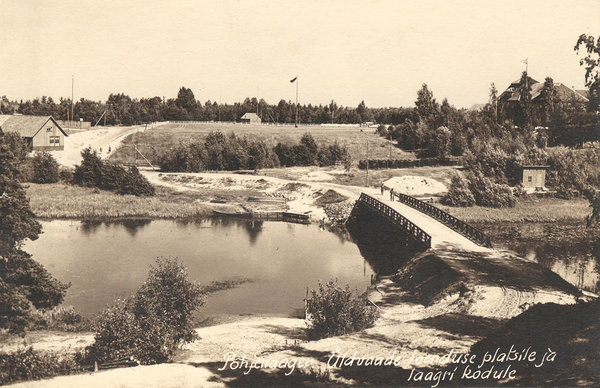
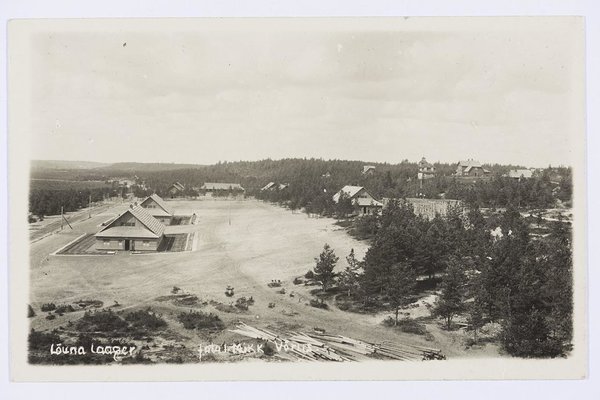
During the Tsarist era, the Mustoja kame field was home to the common lands of the nearby villages, used as pastures and meadows. The Pechory shooting range and the North and South Camps were established onto the kame field during the 1920s and the 1930s.The Second Division base, cavalry regiment, artillery and the second infantry regiment were placed in the North Camp in Värska. Spacious residential buildings and barracks were erected in a short amount of time. There were sports fields on the territory of the camp, bathing houses on the shore of the lake, and a rectangular area for roll calls and parades in the middle of the camp. The artillery camp was on the other shore of the lake along with a sawmill that produced building materials, furniture and skis.
All the regiments tried to fix up their barracks in order to make them look as good as possible after the North Camp was taken into use. However, when the men from the Kuperjanov Infantry Battalion dragged a rock to the entrance of their barracks and drew a skull on it, the other men thought enough was enough. One night, the skull gained a beard and a pipe. Of course, the Kuperjanov men considered the cavalry regiment to be the main suspects.
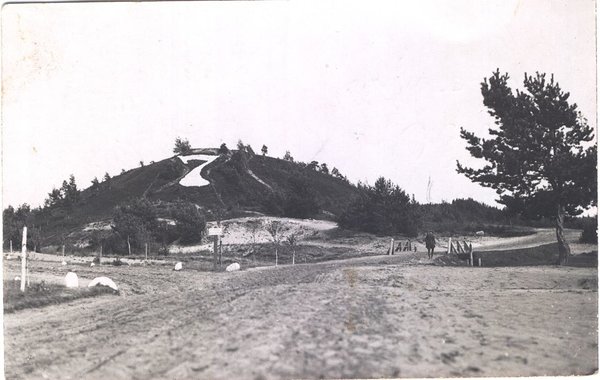
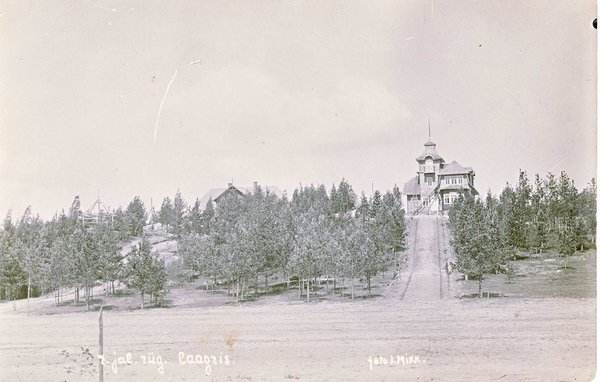
The South Camp was established on and between the southern hills of the Mustoja kame field, which is where a large part of the 7th regiment performed various exercises. The number seven built out of white rocks could be seen on the side of a higher hill. The soldier’s dwellings stood on one side of the camp and economic buildings on the other one, the living quarters of officers and re-enlisters were separate.
×
![1926 – beginning of the establishment of the Pechory North and South Camps]()
Topic
Wars and occupations
Coordinates
Long-Lat WGS 84
Latitude: 57.944502
Longitude: 27.647639L-EST 97
x: 6428426
y: 715925
Location
Ähijärve-Aegviidu matkatee