100 stories from the hiking route
1934 – tidying up of the swimming spot Punane Vähk (Red Crawfish)
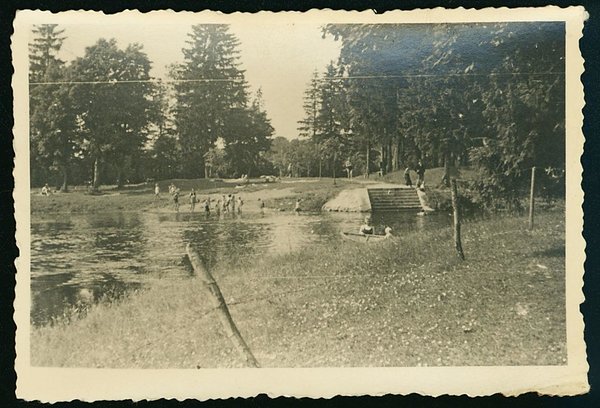
The Keila river island was a popular summer resort in the 1920s–1930s and thanks to great train connections, people also came to enjoy the river from the outskirts of Tallinn. The official reconditioned swimming spot was called Punane Vähk (Red Crawfish). The name came from the old summerhouse that used to be there that had a sign with a red crawfish on it.In 1934, the small town government started tidying up the swimming spot. The river was cleaned of mud, which was taken by horse to the opposite island and the roadside depression. The large stones laying at the bottom of the river were blown up with dynamite and the river was cleaned of rock rubble. A stone staircase was built by the banks to replace the previous wooden one. Weeping willows with supple branches were planted on both sides of the staircase. Roads were built and benches were installed. A seat called the chair of the small town elder was installed on a higher hill. However, they did not forgot about lovers either and so, thicker shrubs were planted and a table and benches installed. That lower part of the park with more trees was called Roheline Konn (Green Frog).
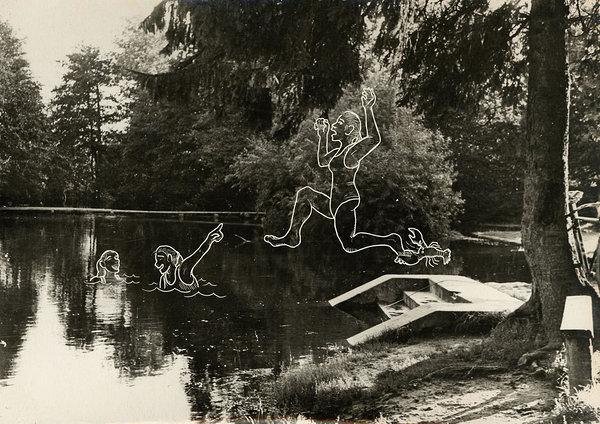
If you went onwards from Punane Vähk, you would find an even more spacious and deeper swimming spot. Here, people could dive into the water from a small diving bridge. This beautiful section of the park was called Paradiis (Paradise). Only the most skilled and courageous swam here.
×
![1934 – tidying up of the swimming spot Punane Vähk (Red Crawfish)]()
Topic
Village life and society work
Coordinates
Long-Lat WGS 84
Latitude: 59.30460833
Longitude: 24.434522L-EST 97
x: 6574127.5
y: 524753
Location
Peraküla-Aegviidu matkatee