100 stories from the hiking route
1947 – emptying of the farms in Kõrvemaa begins
There were 30 farms in Northern-Kõrvemaa before the establishment of the polygon. People were told to move out of their homes in relation to construction of a 33,304-hectare soviet army training polygon. People began abandoning their farms as early as in 1947 but moved out in masses on 1 May 1953.The military polygon was not spoken about, as it was officially known as the Pavlov forest management as well as the Pavlov and Primorsky Forest District of the USSR Ministry of Defence. The roadside signs in Russian and Latvian forbade entry. Põhja-Kõrvemaa was described only briefly in the book “Kas tunned maad” (“Do You Know the Country?”) published in 1965. In addition, it was said that “one needs a permit from the forest management in Aegviidu in order to visit the area in question”.
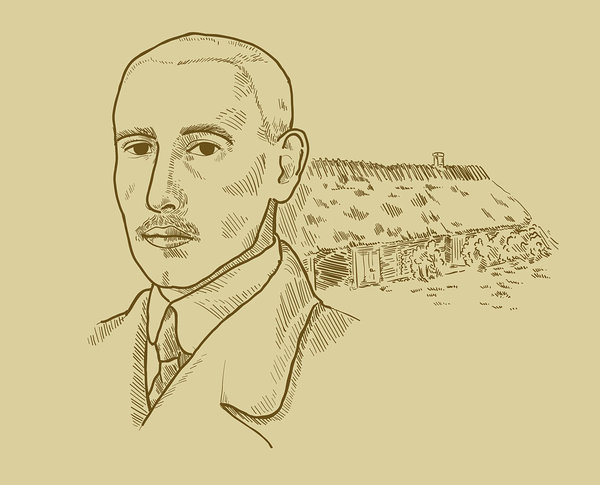
The Vahtriku farmstead is located by the part of the hiking route that can be travelled by bicycle. Ferdinand Petersen, an Estonian engineer and politician was born in this farmstead in 1887 as the son of a forester. Petersen belonged to both the I and the II temporary composition of the government and was part of the Estonian Constituent Assembly, helping to establish and ensure an independent Estonia.
When it became clear in 1944 that a new soviet occupation laid ahead, Ferdinand Petersen (Estonianised into Peterson) escaped to the west – first to Germany and later to the USA. Ferdinand Petersen died at the age of 92 and is buried on the Mount Pleasant Cemetery in Toronto.
Sources:
Karofeld, E. 1997. Tuhkatriinu Põhja-Kõrvemaalt. Eesti Loodus no. 5
Petersen, F. 2001. Mälestusi ja tähelepanekuid.
×
![1947 – emptying of the farms in Kõrvemaa begins]()
Topic
Coordinates
Long-Lat WGS 84
Latitude: 59.387163
Longitude: 25.701082L-EST 97
x:
6584469.7
y:
Location
Oandu-Aegviidu matkatee