100 stories from the hiking route
1952 – Saesaare Power Station and dam are built
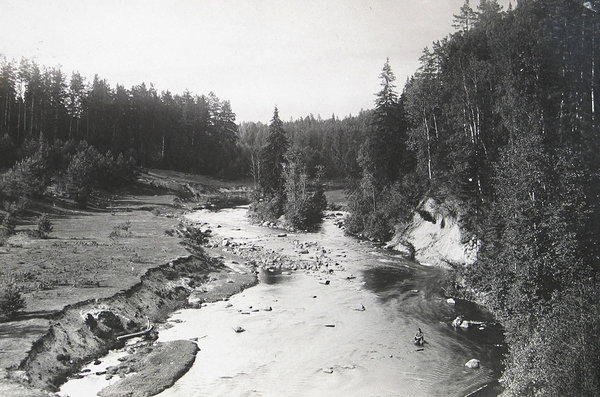
Until 1951, Saesaare rapids were the largest in Estonia as well as considered the most beautiful. The rapids were a couple of hundred metres long and 30 metres wide, the water flowed at 3 m/s. The rapids attracted both nature enthusiasts and anglers.Saesaare (Estonian for island of the saw) got its name after a small rocky islet that used to sit between two distributaries in the upper part of the rapids. According to lore, there used to be a sawmill on the islet in the old days and the large rocks that formed the Saesaare rapids came from the ruins of the mill.
The project for the hydroelectric power station was finished in the spring of 1950, the preparatory works began immediately and after that, the building of the dam. The rocks of the Saesaare rapids were piled up with a bulldozer to form the earthworks of the dam. The dam was finished by the spring of 1952, filling of the reservoir began in May. The power station was formally opened on 28 December 1952.
The dam of nearly 9 metres created a 54-hectare Saesaare artificial lake. The lowest palisades and sandy outcrops by the Ahja River, and the Oosemäe cave were submerged when the artificial lake was established. All the rapids between Saesaare and Kiidjärve also disappeared. The sunken outcrops began to erode.
The power station was in operation until 1970. Today, the Saesaare artificial lake is popular among canoers and you can also enjoy a ride on the riverboat Lonny.
Saesaare is most likely one of Estonia’s best-known examples of how people have redesigned the surrounding landscape with their actions.
×
![1952 – Saesaare Power Station and dam are built]()
Topic
People and nature
Coordinates
Long-Lat WGS 84
Latitude: 58.114880
Longitude: 27.051564L-EST 97
x: 6445620.6
y: 679803.6
Location
Ähijärve-Aegviidu matkatee