100 stories from the hiking route
1988 – the Estonian quail is recognised as a separate species
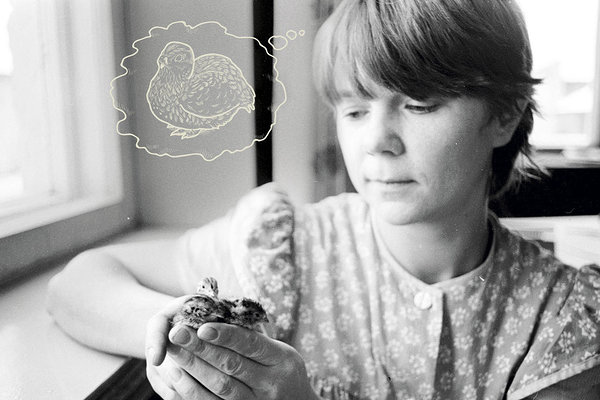
In 1976, the Kaiavere Quail Farm was established at the Kaarepere Forest Farm. The Kaiavere farm was one of the biggest of its kind in Europe, housing 45,000 birds. Harald Tikk, Valeri Neps, Reet Laur and Rein Teinberg created a new quail population in Kaiavere by crossbreeding the Japanese, pharaoh and English white quails. This new species of quail was recognised as a separate species in 1988 and thus named the Estonian quail. The Estonian quail is the only agricultural bird species bred in Estonia.The Estonian quail has a round body and a short tail and neck. The top of the back is higher, creating a hump. The main coloration of the plumage is ochre brown with dark brown stripes. The body mass of male birds is around 172 grams. However, female quails are larger than the males, as their body mass is around 190 grams.
Quail farming flourished in Estonia in the 1990s when over 7 million eggs were produced per year. Harder times came along with the Estonian Restoration of Independence and quail farms went out of business. The Estonian quail gene pool survived only in Rene Treier’s small farm in Äksi. The closed population caused the vitality of the quails to diminish.
The Estonian quail was added to the endangered species’ list in 2001 and a long-term plan to preserve the species was developed.
On 1 June 2010, the Vudila Playland was opened at the location of the Kaiavere quail farm that had been vacant for decades. Vudila’s mascot is the quail Vuta and children can always visit the quails living there.
×
![1988 – the Estonian quail is recognised as a separate species]()
Topic
People and nature
Coordinates
Long-Lat WGS 84
Latitude: 26.6892444444444
Longitude: 58.5898805555556L-EST 97
x: 6497569.1
y: 656346.8
Location
Ähijärve-Aegviidu matkatee