100 stories from the hiking route
1989 – Kabli bus pavilion is built
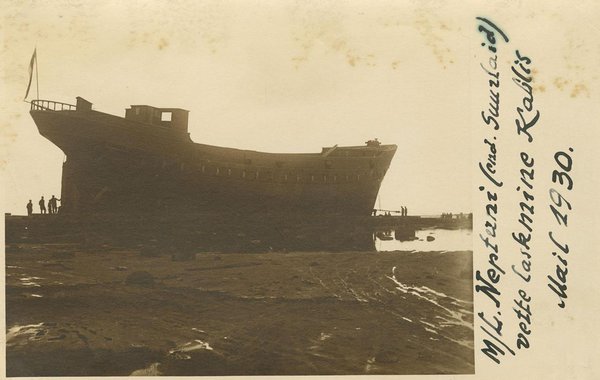
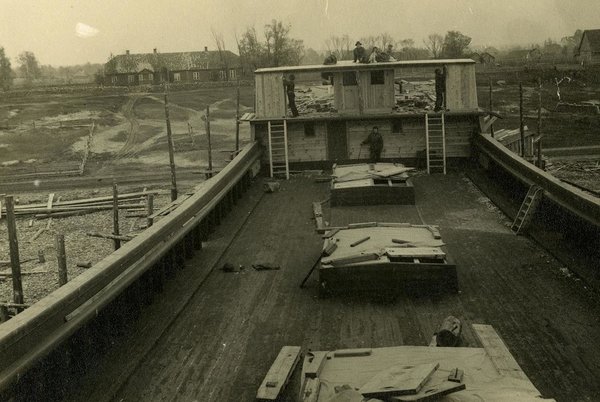
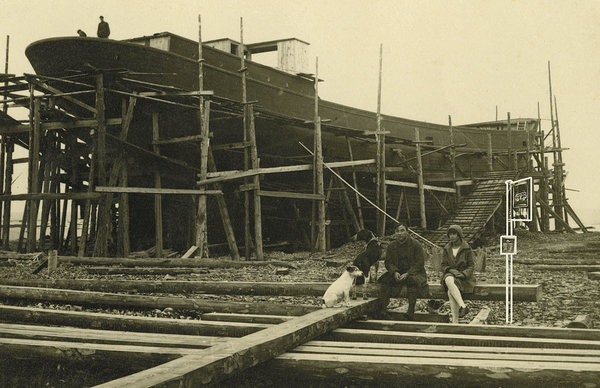
During the 19th century and at the beginning of the 20th century, Kabli was first and foremost a village of seamen and ship-building. Large several hundred register ton long-distance sailboats, barques and schooners, which would load up with forestry products right there at the seaside to take them to England and further, were built in Kabli.Ship-building started to diminish as early as at the beginning of the 20th century. The last vessels built in Kabli were the motor sailboat Maru (1924), sailboat Pikklaid (1925) and the motorboat Neptun (1930). Neptun sailed between European ports under the command of the Baltic-German Captain Fersen. The boat ran aground whilst moving into the Kiel Canal in 1938 and suffered great damages. It is said that Fersen immediately ran off to go to a bar. A Danish salvage boat managed to free Neptun from the shallows and tow it to Copenhagen where it was auctioned off to cover the costs of the rescue. A legend says that if the captain is the first to leave the ship in the case of an accident, disaster ensues. Although Neptun was auctioned off, after a while, it ran onto a mine and broke in half. The front of the boat made it back home to the shipyard at the Kabli beach.
In 1989, men from Kabli built a bus pavilion shaped like a half of the boat based on Bruno Raab’s illustrations. It was meant to symbolise the launch of Neptun, the last wooden ship to be launched at the Kabli beach.
×
![1989 – Kabli bus pavilion is built]()
Topic
Village life and society work
Coordinates
Long-Lat WGS 84
Latitude: 58.008975
Longitude: 24.44721389L-EST 97
x: 6429822.5
y: 526438.2
Location
Ikla-Aegviidu matkatee