100 stories from the hiking route
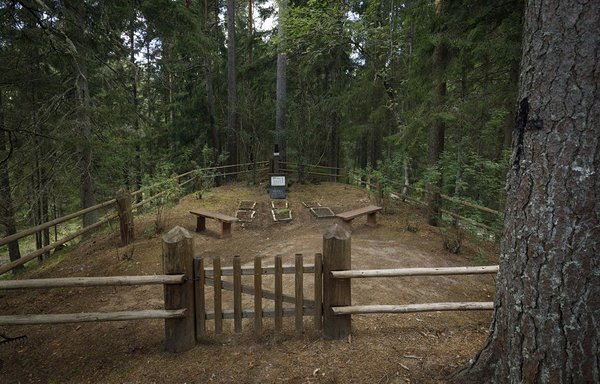
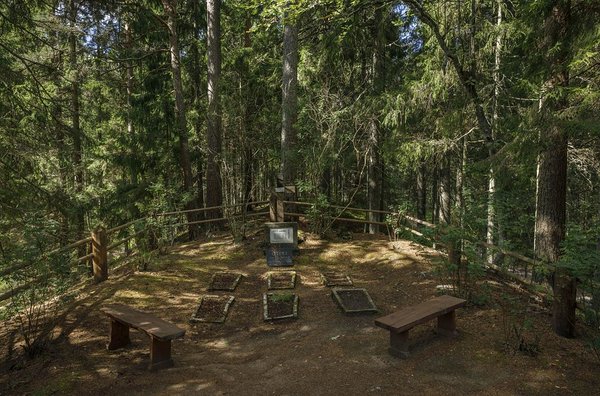
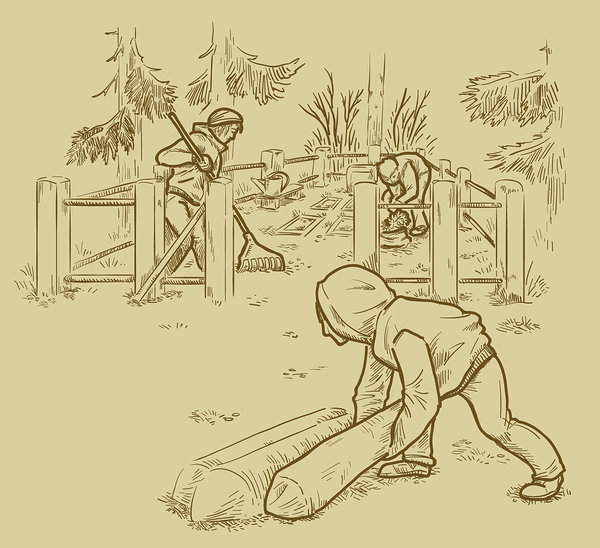
2015– Lemuselja Cemetery is tidied up during the “Let’s do it!” communityactivities’ day
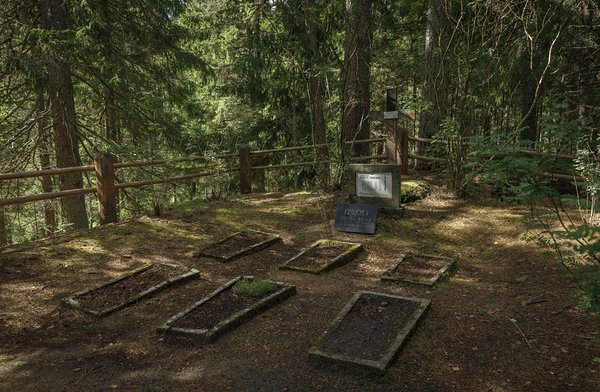
The creation of the first private cemeteries was influenced directly by a ukase from Catherine the Great, which forbade burying the deceased into churches and churchyards mostly due to hygiene issues. Town and parish cemeteries emerged while manor heads established private burial sites in rural areas, 80 of which are still known in Estonia. Farm cemeteries, most likely inspired by the manor heads, began to emerge after it was possible to buy land for perpetuity. Taavi Pae, geographer at the University of Tartu, who has studied Estonian cemeteries, considers Carl Robert Jakobson a great role model of the time in establishing farm cemeteries, as the resting place of Jakobson’s family is his farm at the current Farm Museum of C. R. Jakobson at Kurgja. There are about twenty farm cemeteries in Estonia.The household of Lemuselja established a cemetery near their home in 1915. The host of Lemuselja Farm Hans Putnik (1839–1915) and hostess of the farm Juuli Putnik (1858–1920), their son Karl-Eduard (1887–1947) and his wife Anette (1884–1976), and the family daughter Anna Putnik-Lillbock (1880–1952) and her husband August Lillbock (1879–1964) are buried there.
The locals and RMK rangers tidied up the cemetery during the 2015 “Let’s Do It!” community activities’ day. They dug out the dilapidated concrete posts that surrounded the cemetery and replaced them with sturdy wooden ones and with freshly debarked poles they had prepared earlier. They also installed benches and tidied up the graves.
Sources:
Kilk, V. 2015. Tegime jälle ära. Vihula Valla Leht, no. 5
Maaleht, no. 20, 19 May 2011
×
![2015– Lemuselja Cemetery is tidied up during the “Let’s do it!” communityactivities’ day]()
Topic
Coordinates
Long-Lat WGS 84
Latitude: 59.5618805555556
Longitude: 25.9516638888889L-EST 97
x: 6604314
y: 610330
Location
Oandu-Aegviidu matkatee